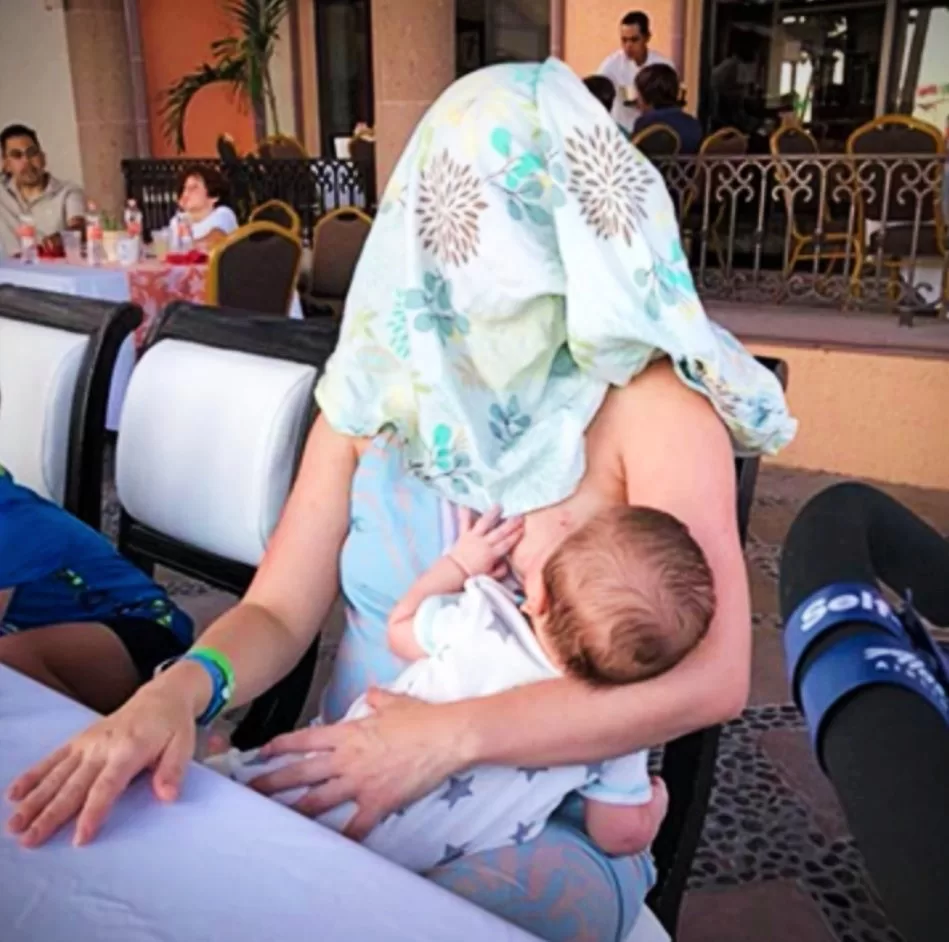
On a sweltering Texas afternoon in 2018, Melanie Dudley stepped into a restaurant with her family carrying the sort of exhaustion and tenderness that only new mothers truly understand. Her three-month-old son was still adjusting to the rhythms of life, and so was she, moving through days marked by feedings, naps, and the unpredictable tides of newborn needs. The restaurant offered relief from the heat, but the air inside still carried a lingering heaviness that was all too familiar during Texas summers. When her baby began to fuss, Melanie responded as any attentive mother would—she turned slightly in her seat, held her child close, and began to nurse him as discreetly as comfort allowed. She made no scene, no announcement, no demand for attention. She simply fed her hungry child, thinking little of it beyond the familiar act of nurturing. Yet, even in this quiet moment, a stranger nearby felt compelled to intrude. A man leaned toward her and delivered the same refrain women have heard for decades: “Could you cover up?” It was a comment dripping not only with judgment but with the assumption that her child’s nourishment was somehow offensive. In that instant, Melanie could have ignored him, or she could have approached the situation with irritation or confrontation. Instead, she chose wit over anger, subversion over submission.
With a mix of amusement and exasperation, Melanie picked up the lightweight nursing cover she had brought with her. Rather than draping it over her son—as the man clearly wanted—she pulled it over her own head, covering herself like a ghostly figure at the lunch table. The gesture was absurd, theatrical, and, as it turned out, brilliantly effective. Her baby remained uncovered and perfectly content, while she sat beneath the cloth like a living illustration of the unnecessary demands placed on mothers in public spaces. Within seconds, the atmosphere of the entire restaurant shifted. A wave of laughter rippled through the tables. Diners who had previously been engaged in their meals now looked up, delighted by the unexpected humor of her response. The man who had instigated the moment was left speechless, his authority evaporating beneath the weight of collective amusement. What could have escalated into hostility transformed instead into shared levity, and Melanie’s silent satire delivered a more powerful message than any argument could have.
A friend captured the moment in a single photograph that would soon travel far beyond the walls of that restaurant. When the image found its way online, it spread at startling speed—first through social media, then across parenting blogs, and eventually into mainstream news outlets. For thousands of parents, particularly mothers, Melanie’s action was not merely funny; it was a cathartic representation of experiences they themselves had endured. Comments flooded in from women who recalled the sting of judgmental looks, whispered criticisms, or direct confrontations while feeding their babies in supermarkets, parks, airplanes, and cafés. Others applauded Melanie’s courage and creativity, marveling at how a single humorous act could call attention to a much larger cultural imbalance. The viral photo became a symbol of pushback against the policing of women’s bodies and the quiet shame often cast upon breastfeeding mothers. Even those who had never navigated these challenges found themselves drawn into the broader discussion about respect, bodily autonomy, and the rights of parents in public spaces.
As the story continued to circulate, Melanie herself expressed surprise at the level of attention it received. In interviews, she emphasized that her decision had not been planned or driven by any desire to spark national debate. She was simply tired—tired from the heat, tired from the demands of new motherhood, and tired of the persistent expectation that women must shrink or hide to avoid making others uncomfortable. The idea of covering her head rather than her nursing child struck her as humorous in the moment, and she acted on instinct. Yet her instinct revealed an undeniable truth: that public discomfort with breastfeeding was not about modesty, but about control and cultural norms that had long outlived their relevance. When she joked about “just wanting to cool off and feed my baby,” she unintentionally highlighted the absurdity of expecting mothers to endure additional inconvenience just to satisfy strangers’ sensibilities. Her lighthearted response laid bare the mismatch between what society demands and what babies need—reminding everyone that hunger does not wait for privacy and that comfort should not be sacrificed for someone else’s outdated expectations.
The conversations sparked by Melanie’s viral moment extended far beyond the initial photo. Advocates for breastfeeding rights used the story to remind the public that in most states—including Texas—breastfeeding in public is legally protected. Laws exist precisely because mothers have long faced pressure to hide, leave, or interrupt feedings. Yet legal permission alone has not erased stigma; shame often lingers in the form of unsolicited comments or disapproving glances. Melanie’s humorous defiance offered a fresh way to challenge that stigma—not through anger, though justified, nor through lengthy explanation, though warranted, but through satire so unmistakably pointed that it left no room for misinterpretation. It demonstrated how humor can become a form of empowerment, diffusing tension while simultaneously exposing the unreasonable expectations placed on women. It also opened conversations about how society can better support parents, not just in theory but in everyday environments like restaurants, workplaces, and public transportation.
Looking back, what began as a simple lunch outing became an enduring illustration of self-respect, autonomy, and the quiet strength of mothers who navigate public spaces with both vulnerability and resilience. Melanie Dudley’s playful act continues to resonate because it captures something universal: the desire to care for one’s child without judgment or interference. Her story reminds us that feeding a baby is never an act that should be hidden or apologized for. It emphasizes that comfort, dignity, and confidence are essential components of parenthood—especially in a world still learning how to fully respect those realities. By transforming a moment of criticism into a moment of collective laughter, Melanie inadvertently sparked a cultural conversation that continues to influence how people think about motherhood today. Her gesture endures not because it was grand, but because it was honest, human, and wonderfully bold. In that restaurant, beneath the soft fabric covering her head, she offered a lesson in both humor and courage, and mothers everywhere recognized a piece of themselves in her quiet, smiling rebellion.