The tragic attack on Sydney’s iconic Bondi Beach has left at least 16 dead and 40 injured, sending shockwaves through Australia and the global community. The victims included a 12-year-old girl and a rabbi, highlighting the indiscriminate nature of the assault. Authorities confirmed that the incident occurred during a Hanukkah celebration, drawing over a thousand attendees, many of them families, into a sudden and horrifying scenario. Police reported that two gunmen opened fire on the crowd, one of whom was killed at the scene while the other remains hospitalized in critical condition. Explosive devices were also discovered in a vehicle connected to the deceased suspect, emphasizing the calculated and premeditated nature of the attack. In response, law enforcement declared the incident a terrorist act and immediately mobilized counter-terrorism and public safety measures across the city, while hospitals worked to care for the injured. The horror of the event has left communities in mourning, grappling with grief, disbelief, and the urgent need for answers about motive and security failures.
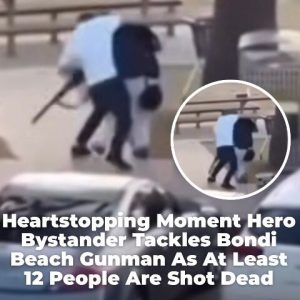
Eyewitness accounts describe moments of sheer panic mixed with extraordinary bravery. Families ran through sand and surf in an attempt to flee the gunfire, clutching children and shielding one another, while bystanders displayed remarkable courage. Video footage captured one individual tackling an armed attacker, an act widely celebrated as heroic by both officials and the public. New South Wales Premier Chris Minns lauded the bystander as a “genuine hero” whose swift action likely prevented further loss of life. Survivors have recounted scenes of chaos, yet also the deep humanity that emerged: strangers forming protective chains, medical professionals running toward danger to aid the wounded, and community members providing comfort amidst the turmoil. In a community event meant for celebration, the sudden eruption of violence has left lasting trauma and a pervasive sense of vulnerability among the Jewish community, with the added complexity of confronting an attack explicitly motivated by antisemitism.
National leaders and international voices were quick to respond, condemning the attack and pledging support. Australian Prime Minister Anthony Albanese described the shooting as “an act of evil, antisemitism, and terrorism,” asserting that “an attack on Jewish Australians is an attack on every Australian.” U.S. President Donald Trump addressed the attacks on both sides of the Pacific, mourning victims of the Bondi Beach incident alongside those affected by a shooting at Brown University, and praising the heroism of those who intervened. First Lady Melania Trump echoed condolences to families, emphasizing empathy for communities suffering due to violence worldwide. Israel joined in solidarity, illuminating the Knesset in the colors of the Australian flag, with Speaker Amir Ohana stating that Israel stands “alongside the Jewish community in Australia.” Even the Palestinian Authority publicly condemned the attack, reinforcing a global consensus that terrorism and targeted violence cannot be justified and underscoring the shared responsibility to protect innocent civilians from extremist actions.
Authorities are investigating the attackers’ motives and backgrounds while assessing broader security threats. Preliminary reports indicate that the Jewish community was intentionally targeted, raising questions about extremist affiliations, radicalization pathways, and potential accomplices. Law enforcement is also examining whether the attackers acted alone or were part of a coordinated plan, and whether intelligence gaps could have prevented the attack. Meanwhile, hospitals in Sydney have been operating under immense pressure, with doctors and nurses managing critical trauma cases, emergency surgeries, and psychological support for the injured and their families. Officials continue to caution the public while implementing heightened security measures in schools, synagogues, and public gathering places, reflecting both the immediate risks and the longer-term implications of such targeted attacks on community safety.
The broader societal impact of the Bondi Beach shooting cannot be overstated. Beyond the immediate physical and emotional toll, the attack has intensified conversations around antisemitism, extremism, and the protection of minority communities in Australia and globally. Jewish centers, cultural institutions, and educational organizations have increased security protocols, while advocacy groups have called for comprehensive policies to counter hate-driven violence. Vigils, memorials, and interfaith gatherings are being held to honor victims and demonstrate solidarity, reinforcing messages of unity and resilience. Public discourse has also highlighted the psychological toll on survivors and witnesses, the importance of trauma-informed care, and the role of community support in healing after terror attacks. Experts stress that the consequences of such events extend far beyond the day of the attack, affecting perceptions of safety, trust in institutions, and the fabric of communal life for years to come.
While the investigation unfolds, the incident at Bondi Beach serves as a stark reminder of the persistent threat posed by extremist violence. Authorities are committed to pursuing justice for victims, providing aid to survivors, and preventing further attacks, but the human dimension of the tragedy remains at the forefront. The bravery of bystanders, the rapid response of law enforcement, and the resilience of the affected community underscore the capacity for courage and compassion in moments of terror. Global reactions, from political leaders to ordinary citizens, reflect both mourning and the collective commitment to condemn hate-based violence. The tragedy also spotlights the ongoing need for public awareness, interfaith dialogue, and proactive policies to combat radicalization and protect vulnerable communities, ensuring that celebrations of faith and culture can continue without fear.
As Australia grapples with the aftermath of Bondi Beach, the enduring lessons are both profound and urgent. Beyond statistics and news reports, the attack highlights the fragility of human life, the importance of preparedness, and the power of solidarity in confronting terror. The Jewish community, while shaken, continues to draw strength from its members’ courage, the support of allies, and the global outpouring of empathy. Memorials and ceremonies honor those lost, while emergency responders and bystanders are recognized for actions that mitigated further tragedy. In the coming weeks and months, recovery will involve not only rebuilding public spaces and securing events but also addressing the psychological and social scars left behind. Yet amid grief and uncertainty, the acts of heroism, compassion, and resilience witnessed at Bondi Beach provide a beacon of hope—a reminder that even in the darkest hours, humanity can rise to confront evil, protect one another, and reaffirm the values of justice, solidarity, and life itself.