A calm summer evening at Sydney’s iconic Bondi Beach transformed into an unimaginable nightmare as gunfire erupted during the first night of a Hanukkah celebration. Families and community members, gathered to commemorate the festival’s meaningful traditions, found themselves running barefoot across blood-streaked sand, desperately seeking cover as panic spread in seconds. The joyous event, intended to celebrate unity and culture, became a scene of horror, leaving a nation grappling with shock and grief. Eyewitnesses described a cacophony of screams, shattering windows, and the surreal realization that a night of happiness had abruptly become a devastating tragedy. Emergency services responded with urgency, but the speed and violence of the attack left chaos in its wake, as parents called for missing children, friends searched desperately for loved ones, and strangers offered comfort amid the terror.
Authorities confirmed that multiple individuals were killed and dozens more injured, including children and community leaders. Two attackers were identified: one was killed at the scene while the second was apprehended and remains in critical condition. Authorities also discovered a suspected improvised explosive device nearby, prompting bomb squads to secure the area. Law enforcement swiftly declared the incident a terrorist attack targeting a religious and cultural gathering, highlighting the deliberate nature of the violence. As the investigation continues, counterterrorism units are analyzing digital communications, social media activity, and potential international connections, while forensic teams meticulously document evidence from the beachfront and surrounding areas. Residents were urged to stay indoors, and police established a wide cordon to ensure public safety as the full scope of the tragedy began to emerge.
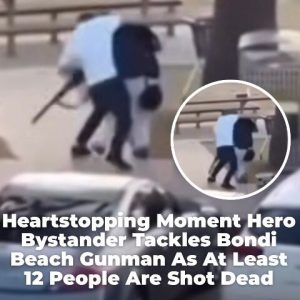
Amid the devastation, extraordinary acts of courage stood out. A bystander, captured on video, confronted one of the shooters, wrestled the firearm away, and disarmed the attacker, potentially preventing further casualties. Eyewitnesses praised the individual as a hero, noting that their bravery provided critical moments of safety for nearby families and children. Multiple survivors recounted harrowing escapes, describing dives behind parked cars, barricades in nearby restaurants, and frantic searches for loved ones amid the chaos. Social media quickly became a lifeline for communication, with videos, photos, and updates documenting both fear and heroism. While the attack inflicted unimaginable pain, these stories of courage offered glimmers of hope and a reminder of humanity amid tragedy.
Emergency responders worked tirelessly to care for the wounded, transporting victims to hospitals across Sydney. Paramedics faced extraordinary challenges attending to critically injured individuals, providing life-saving interventions, and coordinating rapid evacuations while maintaining public safety. Hospitals, including St Vincent’s, Royal Prince Alfred, and St George, received victims in critical condition, highlighting the scale of the emergency response. Helicopters and rapid-response units moved swiftly, while law enforcement maintained a secure perimeter around the scene. Authorities confirmed that no further immediate threats existed elsewhere in Sydney, but security remained heightened as investigations and forensic analyses continued. The professionalism and speed of first responders were widely praised for mitigating the potential for additional loss of life during this chaotic and unpredictable attack.
The broader community and national leaders expressed profound sorrow and solidarity. Prime Minister Anthony Albanese described the incident as “shocking and deeply distressing,” emphasizing both the courage of emergency personnel and the resilience of communities affected. Jewish community leaders confirmed that the Hanukkah celebration had been directly targeted, calling for increased vigilance at religious and cultural gatherings. Memorials, vigils, and moments of reflection were organized to honor victims and provide spaces for collective grieving. Politicians, faith leaders, and civic organizations underscored the importance of unity and support for survivors, emphasizing that the nation must confront extremism while maintaining compassion and cohesion. Across social media, citizens shared messages of condolences, calls for calm, and stories of bravery that emerged from the tragedy.
As Sydney and the nation process the profound impact of this event, conversations have begun about security, emergency preparedness, and the importance of community resilience in the face of sudden, indiscriminate violence. Experts note that acts of heroism, swift medical response, and community solidarity can significantly reduce harm in such incidents, but long-term strategies for prevention and support remain critical. Survivors, families, and witnesses face not only physical recovery but also the psychological aftermath, including trauma, grief, and the challenge of returning to daily life in a space forever marked by violence. Discussions of extremism, public safety, and cultural protection have taken center stage, reflecting the need for both immediate action and long-term policy solutions to prevent similar tragedies in the future.